
Dental Implants Beaverton
Root-to-Crown Tooth Replacement

When looking for a more permanent way to replace missing teeth, there is only one solution that can rebuild the complete root-to-crown structure: dental implants. At Wolfe Dental Cedar Mill, our dentists are trained and equipped to provide the full dental implant placement and restoration process in-house. If you are ready to enjoy a longer-lasting smile, call our office to schedule a consultation for dental implants in Beaverton.
Why Choose Wolfe Dental Cedar Mill for Dental Implants?
- Start-to-Finish Dental Implant Placement Available
- Customized Treatment Plans Tailored to Each Patient
- Patient Comfort Remains Our Focus
What Are Dental Implants?

Dental implants are titanium posts that are designed to mimic the structure and function of natural tooth roots. Placed within the jawbone, they fuse with bone tissues through a process known as osseointegration. Once fully healed, this versatile tooth replacement can support a dental crown, bridge, or denture depending on how many teeth you need to have replaced.
The 4-Step Dental Implant Process
Each patient interested in dental implants can expect a customized treatment plan; however, everyone must complete four steps for successful results. These steps include scheduling a consultation with our implant dentist in Cedar Mill, undergoing in-house dental implant placement, recovering at home for 4-6 months before receiving your metal abutments, and having your new dental crown, bridge, or denture attached.
Initial Dental Implant Consultation
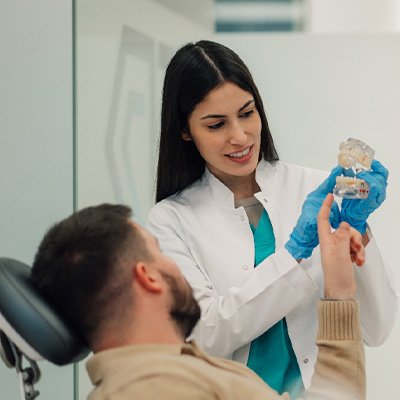
Meeting with our Wolfe Dental team for an initial dental implant consultation is the first step toward achieving a beautiful, healthy, permanent smile. During your appointment, we will carefully examine your mouth and review your overall health, then analyze your jawbone density using digital imaging. This will determine whether dental implants are right for you. Most patients can receive these prosthetics, but additional procedures are often needed to ensure the new teeth have the best environment for long-term success.
If we think you will benefit from bone grafting, tooth extraction, or gum disease treatment, we will add these to your treatment plan and address them first.
Dental Implant Surgery
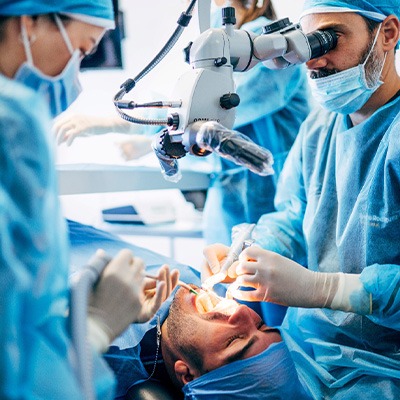
Wolfe Dental has an in-house periodontist and oral and maxillofacial surgeon, as well as expertly trained dentists, who can complete dental implant surgery from start to finish. No referral is needed, so you can stay in the same comfortable environment while we rebuild your smile.
On the day of your procedure, we will administer local anesthesia, a numbing agent, to ensure you remain pain-free and comfortable throughout your visit. We then carefully place each dental implant in the right position for maximum bonding and support. Our team will close your gum tissue and secure protective healing caps on each implant before you leave.
Dental Implant Osseointegration/Abutment
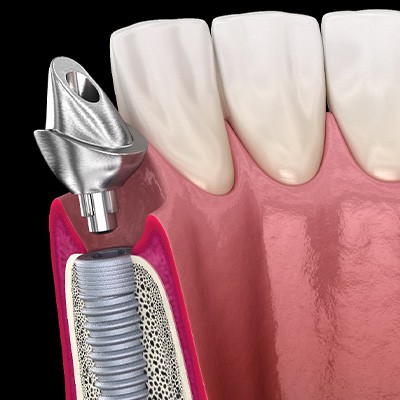
Recovery can take 4-6 months, but we will provide essential instructions to help your implants and bone fuse successfully. A solid foundation for your new teeth is most important, so sticking to a soft food diet and avoiding physical overexertion for the first several days will promote faster healing.
Once we're confident your implants and jawbone are well integrated and healed, we will attach metal abutments to each prosthetic. These small appliances hold your restoration in place, so it doesn’t slip or loosen.
Delivery of Dental Implant Restorations

When it’s time to receive your new custom restoration, we will invite you to our office and prepare to secure your natural-looking teeth to your implants. Earlier impressions captured by our digital scanner allow lab technicians to build your smile to the specifications and desired color we provide. Once it arrives at our office, we will thoroughly examine it to ensure it meets our standards before attaching it. If you are fully satisfied with your new appearance, you will be free to leave and begin enjoying life with your beautiful smile.
Benefits of Dental Implants
Millions of individuals throughout the United States are currently living with dental implants. If you are considering this state-of-the-art tooth-replacement solution for yourself, then we recommend scheduling a consultation with us. That way, we can determine if you’re a good candidate and, if you are, the countless benefits that come with dental implants.
Day-to-Day Benefits

Replacing one, a few, or an entire arch of missing teeth with dental implants can:
- Boost Your Self-Esteem – Simply put, tooth loss can make you appear older than you are. With dental implants, we can fill the gaps in your smile or give you a completely new row of teeth. That way, you can smile with complete confidence again.
- Restore Your Bite Strength – Not only do dental implants get their strength from your jawbone, but they are topped with durable restorations. As a result, you’ll enjoy a stronger bite that allows you to eat the foods you love with ease.
- Improve Your Speaking Patterns – If you’ve had difficulty enunciating clearly following tooth loss, you’re not alone. The good news is that we can fill the gaps in your smile with dental implants, improving your speaking patterns in the process.
Health Benefits

Choosing to rebuild your smile with dental implants can also have a positive impact on your oral and overall health. Here are a few examples:
- They Can Prevent Dental Drift – As you may have guessed, dental drift is when the teeth surrounding the gap shift into the open space. What you may not have guessed, however, is that it can lead to several issues, including premature wear. Fortunately, that’s where dental implants come in.
- They Help Prevent Bone Loss – Dental implants are truly unique because they can replace both the root and crown of your tooth. As a result, the jawbone gets stimulated when you chew. This, in turn, prevents further bone and tooth loss.
- They Allow You to Eat Nutrient-Dense Foods – We mentioned above that dental implants can restore the strength of your bite. This allows you to enjoy varied, healthy, and well-balanced meals that are filled with essential vitamins, minerals, and nutrients.
Long-Term Benefits

Finally, dental implants in Beaverton come with several long-term benefits, including:
- They Are Cost-Effective – Oftentimes, patients assume that dental implants are too expensive. However, they don’t require regular replacement or adjustments, dental insurance providers often cover a portion of the cost, and they can last for 30+ years!
- They Are Easy to Maintain – In short, you can keep your dental implants in pristine condition with the same best practices that you use to care for your natural teeth, like brushing your teeth twice a day and scheduling a dental cleaning twice a year.
- They Help Maintain a Youthful Face Shape – Oftentimes, patients who are struggling with considerable tooth loss have a sunken-in, hollow appearance. Dental implants can help prevent that by filling the gaps in your smile and preventing bone loss!
Who Dental Implants Can Help
If you are an adult who is missing one or more teeth, there is a good chance that you will be considered a candidate for dental implants near Cedar Hills. Although a comprehensive examination is required by a member of our team, we can determine whether you are free to move forward with treatment right away or if you need preliminary services to set your smile up for greater success.
Missing 1 Tooth

A single missing tooth can be easily replaced with one titanium implant post, metal abutment, and customized crown. Instead of altering healthy teeth nearby, we can position the lone implant post into the jawbone so that it fuses with the bone tissues to create a stable foundation for your new smile.
Missing Multiple Teeth

Missing multiple teeth doesn't mean you have to resort to a traditional dental bridge. Instead, you can entrust us to place two dental implant posts into the vacant sockets before securing a custom dental bridge in place. This eliminates the need to use healthy teeth as anchors and instead uses the implant posts as the basis of support.
Missing All Teeth

An entire arch of missing teeth can be restored with the help of 4-6 dental implant posts. Positioned along the jawbone to create a stable base, these titanium posts can support a customized denture that helps to improve bite force, stimulates the existing jawbone, and creates a more youthful appearance because of their ability to reduce facial sagging caused by tooth loss.
Understanding the Cost of Dental Implants

No two dental implant treatment plans are the same, which means that the cost of these permanent prosthetics will be different. The only way to receive a clear estimate for treatment is to schedule a consultation with a member of our dental team. From here, we can examine your oral and overall health and determine the price for your new smile. You can expect that we will help you navigate the financial details of your care so that there are no surprises along the way.
Dental Implant FAQs
Does Getting Dental Implants Hurt?
Dental implant surgery is typically performed with local anesthesia. This means that we’ll numb your mouth before the procedure begins, so you shouldn’t feel any pain. However, after the surgery, it’s normal to experience some discomfort, swelling, and bruising, which can be managed with over-the-counter pain medications and ice packs.
Dr. Wolfe or Dr. Yesenofski will provide you with detailed aftercare instructions to help minimize uncomfortable symptoms and ensure a smooth recovery. Most patients find that post-operative pain is manageable and lessens significantly within a few days. So, if you feel a bit sore after your procedure, there’s nothing to worry about. If you start to feel extreme or persistent pain after a few days, call us so we can schedule a follow-up appointment.
Can I Take Dental Implants Out?
Typically, no. Dental implants are designed to be a permanent solution for missing teeth and aren’t removable like dentures. Once placed, the titanium post fuses with your jawbone, providing a stable and secure foundation for a replacement tooth or other restoration. This integration process, known as osseointegration, makes the implant a permanent fixture in your mouth.
Unlike dentures, which can be taken out for cleaning and maintenance, dental implants are cared for just like natural teeth. Regular brushing, flossing, and checkups are necessary to maintain the health and longevity of your enhancements.
Am I Too Old to Get Dental Implants?
Not at all! Fortunately, there is no upper age limit for dental implants, and many older patients successfully receive them. The most important factors we assess for dental implant candidacy are overall health and sufficient jawbone density to support the implants.
Age alone does not disqualify someone from getting dental implants. In fact, many seniors find that implants significantly improve their quality of life by restoring their ability to eat, speak, and smile with confidence. During your consultation, our team will evaluate your medical history, oral health, and bone structure to determine if you are a good candidate for dental implants.
How Long Does It Take to Recover from Dental Implant Surgery?
The initial recovery period after dental implant surgery typically lasts about one to two weeks, during which you may experience some swelling, bruising, and discomfort. Most patients can return to their normal activities within a few days.
However, complete healing and osseointegration, where the implant fuses with the jawbone, usually takes around three to six months. During this time, it’s very important to follow our team’s post-operative care instructions and attend all follow-up appointments to ensure proper healing and implant stability. Patience and vigilance during this healing period are the keys to achieving the best possible outcome for your dental implants.